AI-assisted detail management.
Turn axis curves into adaptive graphs instantly.
Manipulate the grid and extract values.
Portia is my widely adaptable, test-stage open-source Rhino Grasshopper C# plugin to model grid-like structures: roof grids, steel and timber structures, tensile membranes. Lately an optional, prompt-based AI control layer is added over the deterministic logic. This is an expanding log of experiments and updates.
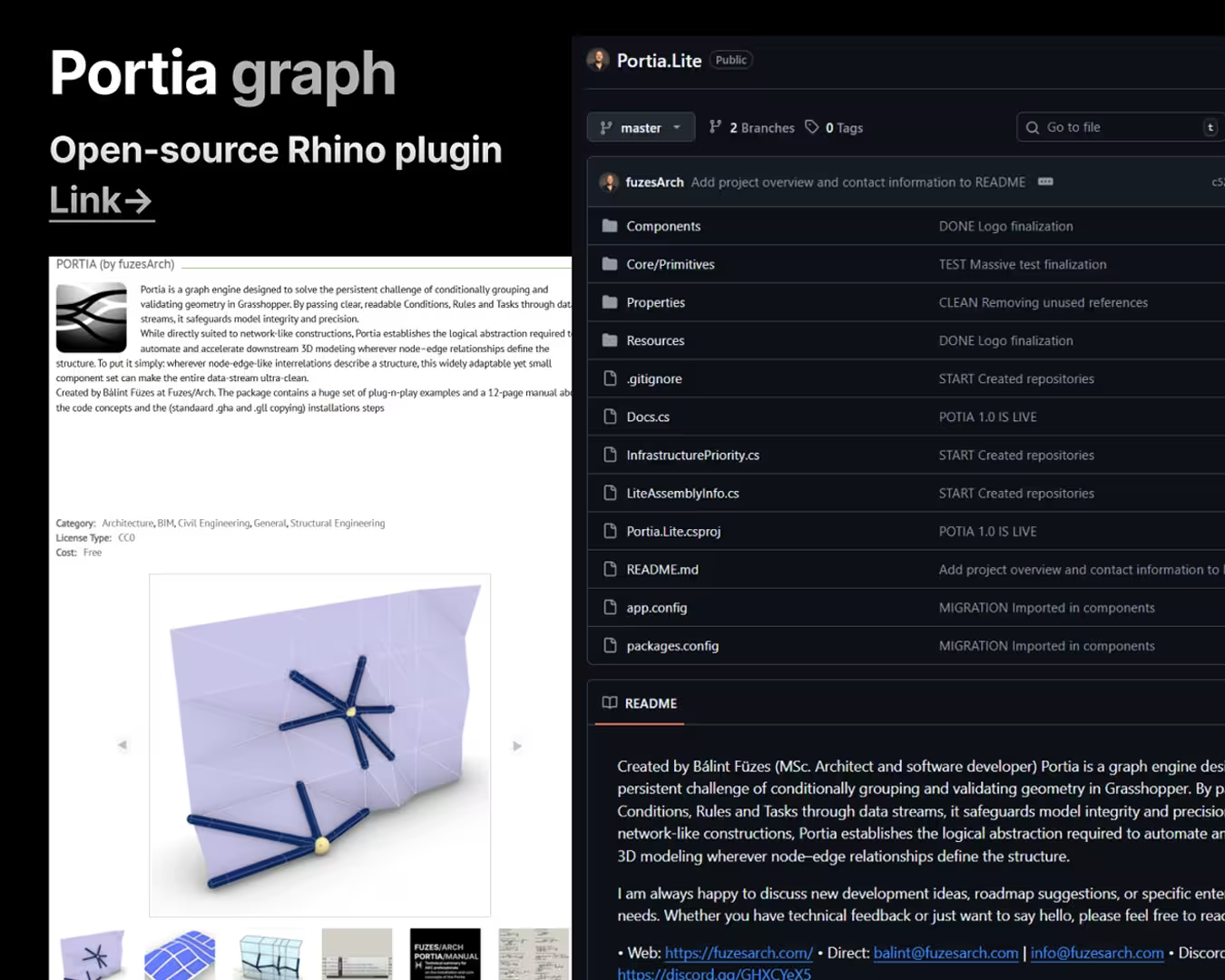
Portia 1.0 is now live on Food4Rhino! An exhaustive example set and an introductory PDF arrives attached to the first stable build.
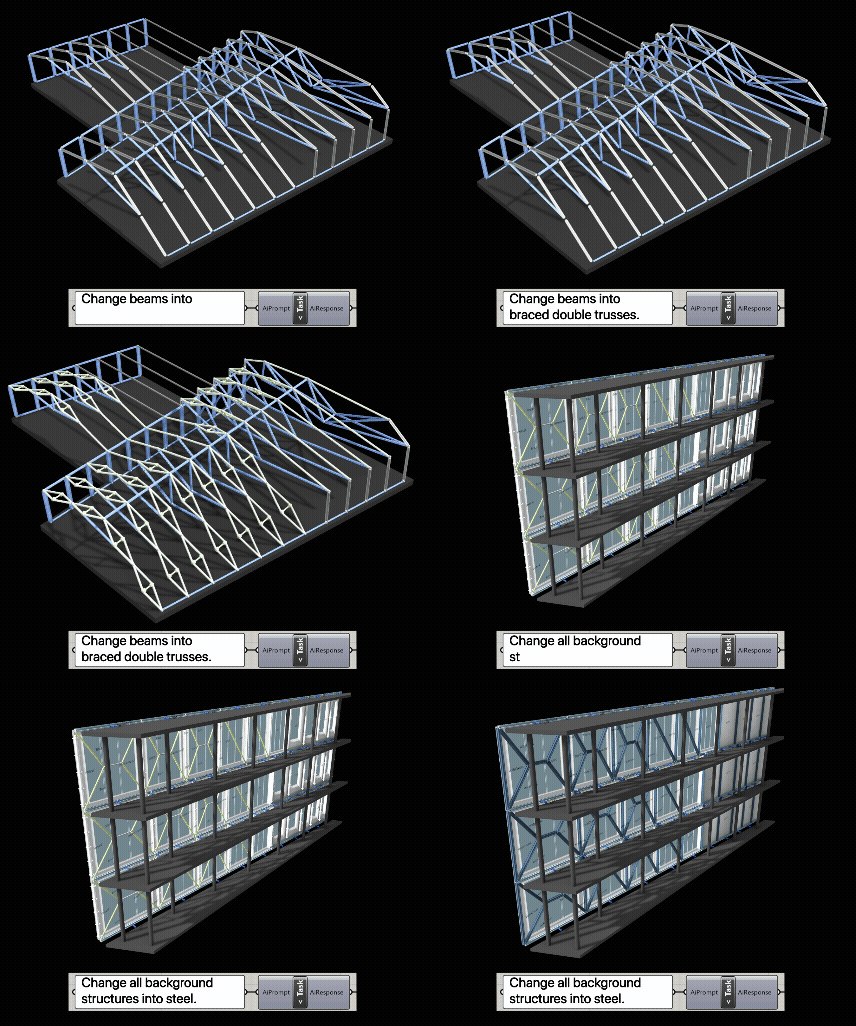
AI-prompt Task added to Portia! The entire Task / Condition / Rule ecosystem is commandable from verbal prompts.

Bálint Füzes
MSc Architect & Software Developer
I’m Bálint Füzes, MSc Architect and certified software developer. I support architects and engineering teams with modeling and computation - usually at the construction-near phase of projects.
My focus is the harmonious interplay of geometry and algorithms - to expand work-in-progress designs into logically lightweight, yet highly-detailed, fabrication-ready models.
If you're looking at a model that needs to be on site in four weeks and it isn't — then yes, almost certainly. If you're at the phase where geometry needs to stop being approximate and start being exact — permit, fabrication, execution — then probably also yes. Scale doesn't really matter, building type is also completely free. What matters is whether there's a gap between where the design currently lives and where the model needs to be for the next phase.
Honestly, however makes sense for the project. In-house, fully remote, occasionally on-site, project-based, longer-term — we'd just figure out what fits. You stay on the project, I look at what the geometry actually needs at that point, and we set something up from there. You keep full authorship and IP throughout. The overhead of adding this kind of "capacity and capability extension" to your team is genuinely minimal. Plus it mirrors the usual, fluctuating project loads of our industry.
Not at all — it's just my own toolset running in the background. What it does is make sure every dimension and geometric relationship gets validated programmatically - wherever needed. You never have to see or touch any of it, if you don't want to. What you get is clean models and plans that have been checked.
Yes, and it comes up pretty regularly. Things like document automation, viewport logic, parametric validators, project-specific solvers — components your team can use directly without knowing what's deep inside them. I always start with a mindmap of the workflow so we're aligned before a single line of code gets written. Plus everything ships with documentation and ready-made examples - you just use the plug-n-play module.
Get in touch.
Do you see an alignment or are you simply interested? Drop a line:
balint@fuzesarch.com
+36302980503
 Get in touch